
In men, it is primarily produced by the testes. Smaller amounts are also synthesized in peripheral tissues.
What to Know About:
Testosterone
Misinformation around testosterone affects real health decisions. If you’ve got questions, you’re in the right place.
Testosterone is a hormone produced in all bodies. It plays a role in physical energy, muscle and bone health, metabolism, and overall vitality. Despite this, most people encounter testosterone through fragmented information (marketing, stigma, or outdated assumptions) rather than clear medical context.
WHAT IS TESTOSTERONE
Testosterone, in plain terms
Testosterone is an androgen hormone produced throughout the body.
Hormones act as signaling systems. Testosterone helps regulate how different systems function and adapt over time. Its effects depend on age, baseline levels, overall health, and how it interacts with other hormones.
Testosterone is not inherently therapeutic or harmful. It is part of normal human physiology.
WHAT DOES TESTOSTERONE DO IN THE BODY
What testosterone supports

Energy and stamina
Testosterone contributes to how the body produces and uses energy, influencing fatigue and physical resilience.

Muscle and bone integrity
It supports lean muscle mass and bone density, which are essential for mobility and long-term health.

Cognitive and neurological function
Androgens are involved in brain signaling and may influence focus, motivation, and mental clarity.

Metabolic regulation
Testosterone interacts with insulin sensitivity, fat distribution, and cardiovascular health as part of a broader metabolic system. These functions are interconnected. Hormones do not operate in isolation.
WHY TESTOSTERONE IS SO MISUNDERSTOOD
How testosterone became distorted
Public understanding of testosterone has been shaped less by medicine and more by culture.
Both paths lead to the same outcome: confusion, stigma, and uneven access to information.
MYTHS VS. REALITY
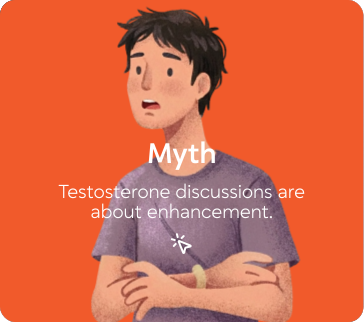
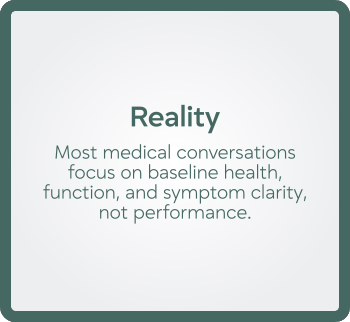
Common misconceptions
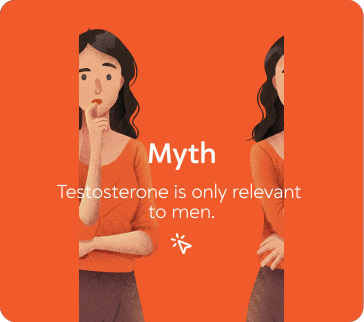
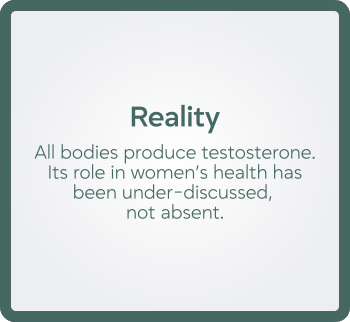
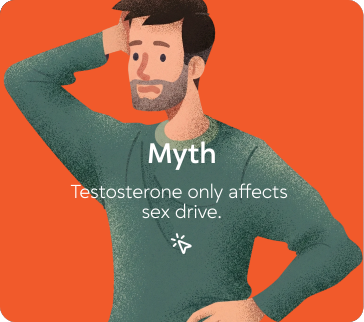
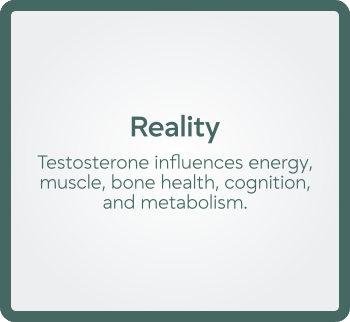
TESTING, CARE, AND CONTEXT
Why testing and education matter
Hormone levels change over time. When testosterone is excluded from routine evaluation, symptoms may be assessed in isolation rather than as part of a broader hormonal picture.

Testing alone does not dictate care. But lack of information limits meaningful conversation.
Understanding how testosterone functions helps patients and clinicians ask better questions and avoid fragmented decision-making.
RESEARCH GAPS & REAL-WORLD PRACTICE
Where science and practice don’t always align
Women have been underrepresented in testosterone research, and there is currently no FDA-approved testosterone therapy specifically indicated for women.
At the same time, hormone and midlife clinicians have prescribed compounded testosterone for women for decades based on clinical judgment and emerging evidence.

This gap between research infrastructure and real-world care creates uncertainty for patients, clinicians, and policymakers alike.