
Women have been underrepresented in research and often excluded from hormone discussions altogether.
Testosterone:
Misunderstood, Misinformed, Overlooked.
Misinformation around testosterone affects real health decisions. If you’ve got questions, you’re in the right place.
mission
Hormone health is public health.
The Testosterone Project is a nonprofit advocacy initiative focused on education, access, and reform around testosterone and hormone health. Testosterone plays a role in every body, yet the public conversation around it has failed most people.
These narratives have real consequences. They shape policy, influence clinical care, and leave people confused about what testosterone actually does in the body and when it matters for health. We focus on clarifying what testosterone does, how it is regulated, and where gaps in research and care still exist, so individuals, clinicians, and policymakers can make informed decisions grounded in evidence.


What to Know:
Clear, evidence-based explanations of testosterone, how it functions in the body, and why it’s often misunderstood.


Women’s Health:
How testosterone affects women and why it’s frequently left out of care conversations.

Access & Advocacy:
How policy, regulation, and stigma shape who gets information, testing, and care.
Stigma doesn’t stay cultural. It becomes policy.
Public narratives around testosterone have influenced how it’s regulated, , researched, and discussed in clinical settings.
For women, that often means exclusion or silence.

For men, it has meant decades of messaging tied to performance, misuse, or fear, rather than medical context.
These narratives affect access, research priorities, and the questions people feel allowed to ask in healthcare settings.



Questions people are already asking.

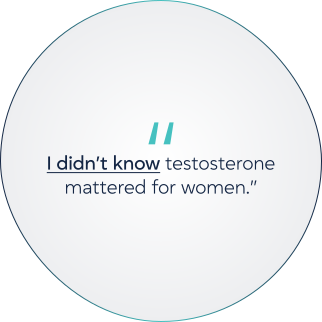


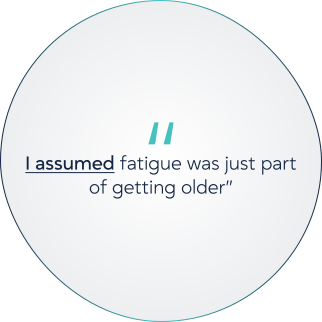

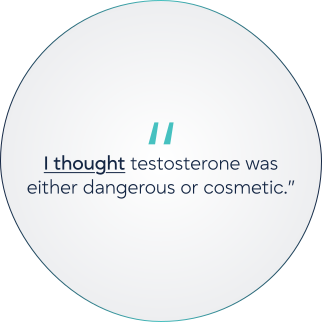
Stories from patients, clinicians, and advocates help surface where education and policy fall short; and where change is possible.
Public understanding shapes public policy.


have added their names in support of science-aligned hormone policy.
Policy decisions are influenced by what the public understands and what lawmakers hear. Adding your name helps demonstrate that hormone health deserves evidence-based treatment.
There’s more than one way to engage.
Some people start by learning.
Others start by sharing their experience.
Some want to follow the research.
Others want to support policy reform.


